
Depending on the child, ABA therapy may focus on communication, play, social interaction, daily routines, safety, learning, or greater independence.
No two ABA programs should look the same. A treatment plan begins with your child’s current abilities, strengths, interests, needs, and everyday experiences. From there, the clinical team identifies skills that may make daily life easier at home, in school, and throughout the community.
What Does ABA Stand For?
ABA stands for applied behavior analysis.
Applied behavior analysis looks at how people learn and how the environment around them can affect behavior. ABA professionals use this information to teach new skills, understand why certain behaviors happen, and identify changes that may help a child participate more fully in everyday life.
In simple terms, ABA therapy helps answer questions such as:
- What skill does this child need?
- What may be making that skill difficult?
- How can the skill be divided into manageable steps?
- What helps the child stay interested?
- Where does the child need to practice?
- How can caregivers encourage the same progress?
ABA therapy is often associated with challenging behavior, but much of the work focuses on teaching new skills. A child may learn to ask for help, express discomfort, complete part of a routine, play near other children, or move more comfortably between activities.
Who Is ABA Therapy For?
ABA therapy is often used with children with Autism Spectrum Disorder, but it may also support children with Down syndrome, ADHD, and other developmental delays when clinically appropriate.
A child may benefit from ABA therapy when they need additional help with:
- Communicating wants and needs
- Completing everyday routines
- Playing independently or with others
- Managing transitions
- Participating in school or daycare
- Building self-care skills
- Responding more safely in difficult situations
- Becoming more independent
Having a certain diagnosis doesn’t mean that one will require ABA therapy. Children with the same diagnosis might have completely different skills and requirements.
The assessment helps the clinical team understand which skills matter most for the child and whether ABA therapy may be appropriate
How Does ABA Therapy Work?
ABA therapy often starts by choosing a specific skill and breaking it into smaller steps.
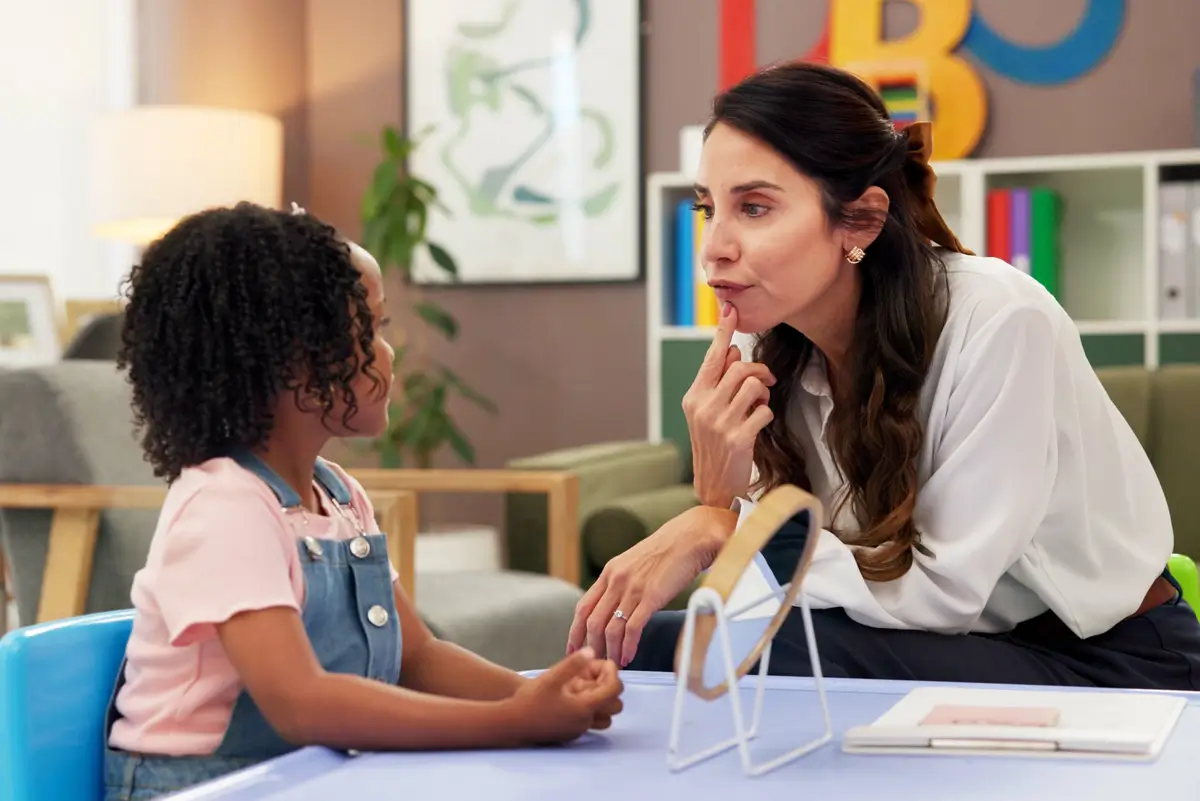
The therapist may initially provide help through spoken prompts, gestures, pictures, or demonstrations. As the child becomes more confident, that assistance is gradually reduced.
Positive reinforcement is also commonly used. Once the child becomes more secure in themselves, the therapist reduces the amount of assistance.
For example, a child who wants a favorite toy may learn to point, use a picture, sign, speak, or use a communication device. When the child communicates, they receive the toy.
One child may respond well to praise or high-fives, while another may prefer bubbles, music, movement, a favorite activity, or time with a special toy.
A thoughtful ABA program learns what interests the child rather than assuming the same approach will work for everyone.
Common ABA Techniques
ABA therapy can include several teaching methods. The techniques selected depend on the child, the skill being addressed, and the setting where ABA therapy takes place.
Positive Reinforcement
Positive reinforcement follows a helpful response with something meaningful to the child. This may include praise, access to a favorite activity, a toy, music, movement, or a natural outcome.
For example, when a child asks for help, the therapist responds by helping them. This encourages the child to use that communication skill again.
Prompting
A prompt is a form of help used while a child is learning a new skill.
Prompts may include spoken reminders, gestures, pictures, demonstrations, or physical guidance. The therapist reduces the amount of help as the child becomes more independent.
Task Analysis
Task analysis involves breaking a larger routine into smaller steps.
Brushing teeth, getting dressed, washing hands, and packing a school bag can each involve several separate actions. Teaching one step at a time can make the full routine easier to learn.
Naturalistic Teaching
Naturalistic teaching uses everyday activities and the child’s interests as learning opportunities.
A therapist may practice communication during play, work on transitions between activities, or teach self-care skills during a normal routine. This can make learning feel more connected to daily life.
Modeling
Modeling involves showing the child how to complete a skill before asking them to try.
The therapist may model how to play with toys, take turns, wash hands, or do part of an activity at school.
Generalization
Generalization means helping a child use a skill with different people, materials, and in different places.
A child may first learn to ask a therapist for help and later practice asking a parent, teacher, or daycare provider.
What Skills Can ABA Therapy Address?
ABA therapy can be used to teach many different skills. The areas selected depend on what the child can already do and which changes may make daily life more manageable.
Communication
Communication can include spoken words, gestures, signs, pictures, or a communication device.
ABA therapy may help a child:
- Ask for help
- Make choices
- Request a break
- Express discomfort
- Answer simple questions
- Follow directions
- Take part in conversation
- Communicate wants and needs
A child does not need to speak verbally to communicate successfully. The treatment team may also work with speech professionals when another communication method would be helpful.
Play and Social Interaction
Some children need help learning how to play independently, play near others, or join shared activities.
Applied Behavior Analysis therapy may focus on taking turns, sharing materials, joining a game, responding when another child approaches, or handling small changes during play.
Social teaching should reflect the child’s age, comfort, interests, and communication style. ABA therapy should not try to remove harmless traits or make every child behave in the same way.
Daily Living Skills
Daily routines provide many learning opportunities.
A child may work on:
- Getting dressed
- Washing their hands
- Brushing their teeth
- Using utensils
- Toileting
- Cleaning up
- Packing a school bag
- Completing a bedtime routine
A therapist may begin with one part of the task before building toward the full routine.
Transitions and Flexibility
Moving from one activity to another can be difficult, especially when a child is leaving something enjoyable or facing an unexpected change.
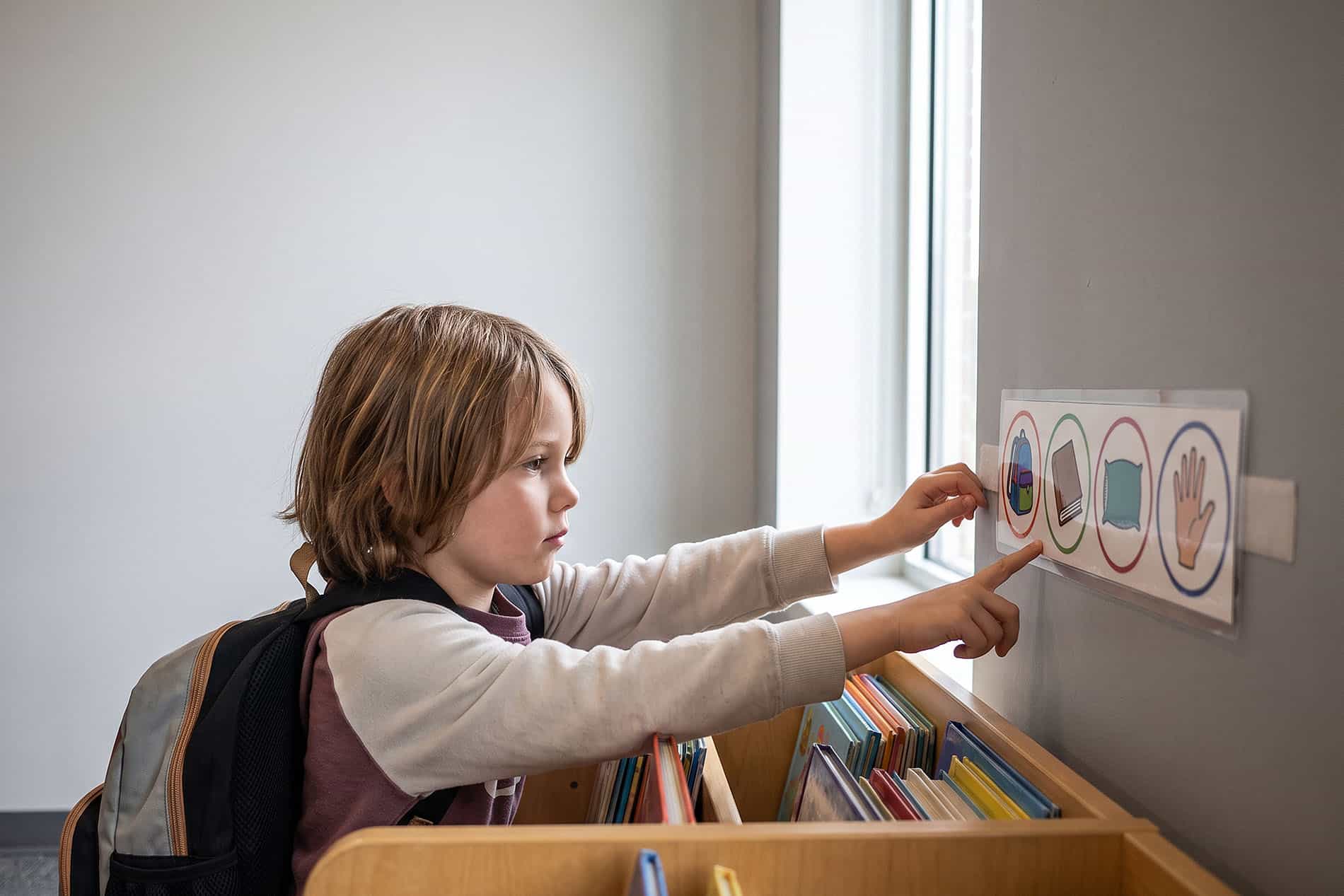
ABA therapy may use visual schedules, countdowns, choices, communication tools, and gradual practice to make transitions feel more manageable.
Safety
Some children need direct teaching around safety. ABA Therapy may address staying close to a caregiver, stopping near a road, responding to their name, asking before leaving an area, or communicating when they are hurt.
Safety teaching should be matched to the child’s understanding and practiced carefully.

What Does an ABA Therapy Session Look Like?
No two ABA sessions look exactly alike.
A session may include play, movement, communication practice, snacks, self-care routines, structured teaching, group activities, or time around peers.
For a young child, ABA therapy might involve:
- Building with blocks while practicing turn-taking
- Requesting bubbles or a favorite toy
- Following a picture schedule
- Washing hands before snack
- Moving between activities
- Joining a short group routine
- Asking for help
- Cleaning up after play
These activities may look simple, but the therapist is observing closely, offering help at the right time, and tracking how the child responds.
Modern ABA therapy can be naturalistic and play-based. Teaching does not always happen at a table or through repeated drills. Many skills can be introduced through activities the child already enjoys.
Who Provides ABA Therapy?
An ABA therapy team may include several professionals.
A Board Certified Behavior Analyst, commonly shortened to BCBA, completes the assessment, develops the treatment plan, reviews progress, supervises the behavior analysis team, and changes the program when needed.
A Registered Behavior Technician, or RBT, often provides direct ABA therapy under the supervision of a BCBA. An RBT will work directly with the child during the sessions, follow the plan, and write down notes on the progress.
Caregivers also play a crucial role in Applied Behavior Analysis.
Families know their child’s routines, preferences, relationships, and everyday challenges in ways that cannot be learned from an assessment alone. Their input helps the clinical team choose useful priorities and understand how the child is using skills outside of Applied Behavior Analysis therapy sessions.
How Is an ABA Treatment Plan Created?
ABA therapy usually begins with an assessment.
The BCBA may observe how the child communicates, plays, follows directions, handles changes, completes routines, and interacts with others.
Parents also share information about the child’s strengths, interests, daily routines, school or daycare experiences, previous services, safety concerns, and family priorities.
The BCBA uses this information to create an individual treatment plan. Broad areas are divided into smaller, measurable objectives.
For example, “improve communication” may become asking for help, choosing between two items, or requesting a break.
Breaking skills into smaller steps makes progress easier to teach, follow, and celebrate. delivery of treatment should remain appropriate for the individual’s age, preferences, priorities, and daily life.
How Is Progress Measured?
During each ABA therapy session, the therapist tracks how your child responds to different activities and teaching methods. This may include how often your child communicates independently, how much help they need, whether they complete a routine, or how long they stay involved in an activity.
The BCBA reviews this information regularly to see what is working and where changes may be helpful. As your child builds a skill, the team may introduce the next step or practice it with different people and in new settings.
Progress can look different from one area to another. Your child may move forward quickly with one skill while needing more time and practice with another.
Does ABA Therapy Work?
ABA therapy can help many children build communication, daily living, social, learning, and safety skills. Progress depends on the child’s needs, the quality of the treatment plan, how consistently ABA therapy takes place, and whether developing skills are practiced during everyday routines.
Progress can look different for every child. One child may begin asking for help more independently, while another may handle transitions with less difficulty, participate in an activity for longer, or complete part of a self-care routine with less assistance.
The BCBA regularly reviews how the child responds to Applied Behavior Analysis therapy and makes changes when a teaching method is not helping. Parents and caregivers also share what they notice at home, at school, and in other settings.
ABA therapy tends to be most useful when care remains individualized, progress is reviewed regularly, and the skills being taught reflect what matters to the child and family.
How Long Does ABA Therapy Take?
There is no set timeline for ABA therapy.
Some children receive focused services for several months, while others may benefit from Applied Behavior Analysis therapy for a few years or longer. The number of weekly hours can also vary.
The length of ABA therapy may depend on:
- The child’s current abilities
- The number of skills being addressed
- Treatment priorities
- Progress over time
- The settings where help is needed
- The child’s ability to use skills independently
- Family needs and schedules
A child working on a small number of specific skills may need a shorter program. Another child who needs help across communication, self-care, play, and classroom participation may receive services for longer.
Treatment plans are reviewed regularly. Weekly hours may increase, decrease, or shift toward different areas as the child grows.
Where Can ABA Therapy Take Place?
ABA therapy may happen in several settings.
Hand Over Hand’s Integrated ABA Centers operate within private preschools. Children receive individualized care in dedicated spaces, with carefully planned opportunities to practice classroom routines, play, communication, and interaction with peers.
Home-based ABA therapy may focus on mealtimes, dressing, personal care, sibling interactions, and bedtime routines.
In-daycare ABA therapy may help children with communication, transitions, classroom participation, group activities, and play.
These services might be conducted within the school through classroom observation, Functional Behavior Assessment, staff training, and consultation for teachers.
The recommended setting depends on the child’s assessment, family circumstances, clinical needs, insurance coverage, and service availability.
ABA Therapy Should Respect the Whole Child
ABA therapy should help your child build useful skills without losing sight of who they are.Their personality, interests, preferences, and mode of communication should all be considered during care planning.
ABA therapy may help with communication, daily routines, social interaction, safety, and independence. The skills selected should be in line with what would make daily life easier for your child and family.
Hand Over Hand offers personalized ABA therapy through Integrated ABA Centers, home and daycare services, school consultation, social skills development, and parent guidance.
We take the time to get to know your child, go over all of our recommendations, and tailor our services to the needs of your child.
Contact us today to learn more about ABA therapy and begin the intake process.